vsnlogistics.com

Table of Contents

Landed Cost Calculation for Imports in India

Landed Cost Calculation for Imports in India

(2026 Complete Guide)

Introduction

Importing goods into India involves much more than negotiating a product price with your overseas supplier. Many first-time and even experienced importers underestimate the true cost of bringing goods into the country. This is where landed cost calculation for imports in India becomes critical. Landed cost determines your actual profitability, selling price, working capital requirements, and long-term sustainability. Miscalculations can lead to cash flow pressure, pricing errors, compliance risks, and unexpected financial strain.

This 2026 guide explains:

  • What landed cost means
  • Every component involved
  • Step-by-step calculation method
  • Hidden charges importers miss
  • How freight mode impacts cost
  • Common mistakes to avoid
  • How structured planning reduces financial risk

What Is Landed Cost in Import Business?

Landed cost refers to the total cost of a product once it arrives at your warehouse in India, including all shipping, customs duties, taxes, handling, and local delivery expenses. It is not just the product price. It is not just CIF value. It is the final, real cost you pay before the goods are ready for sale or use.

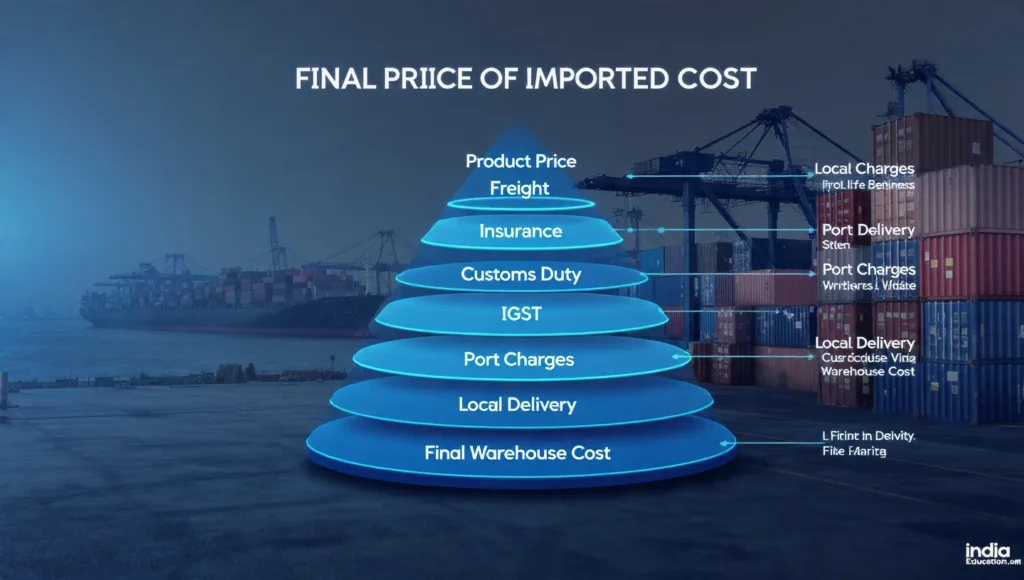
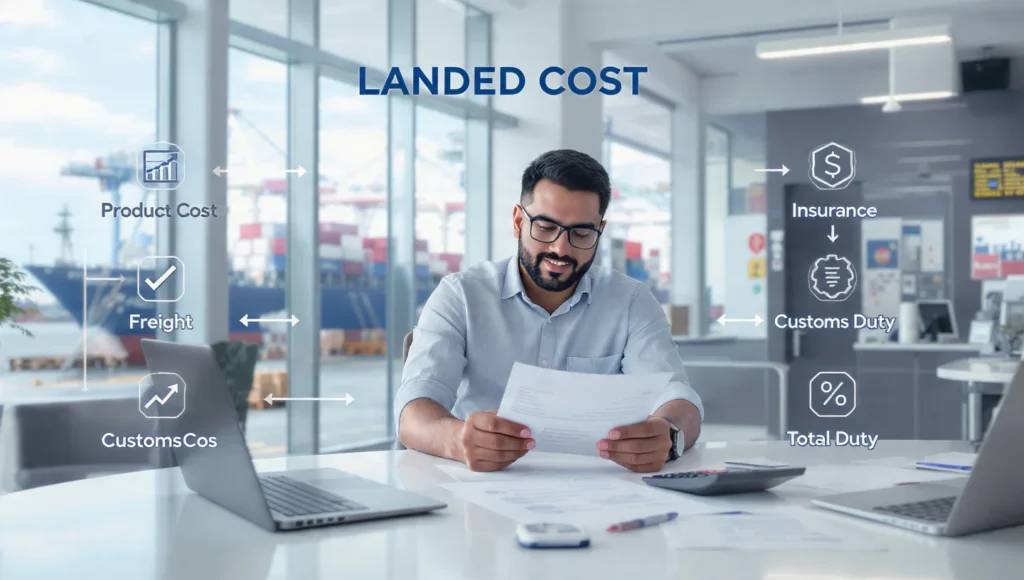
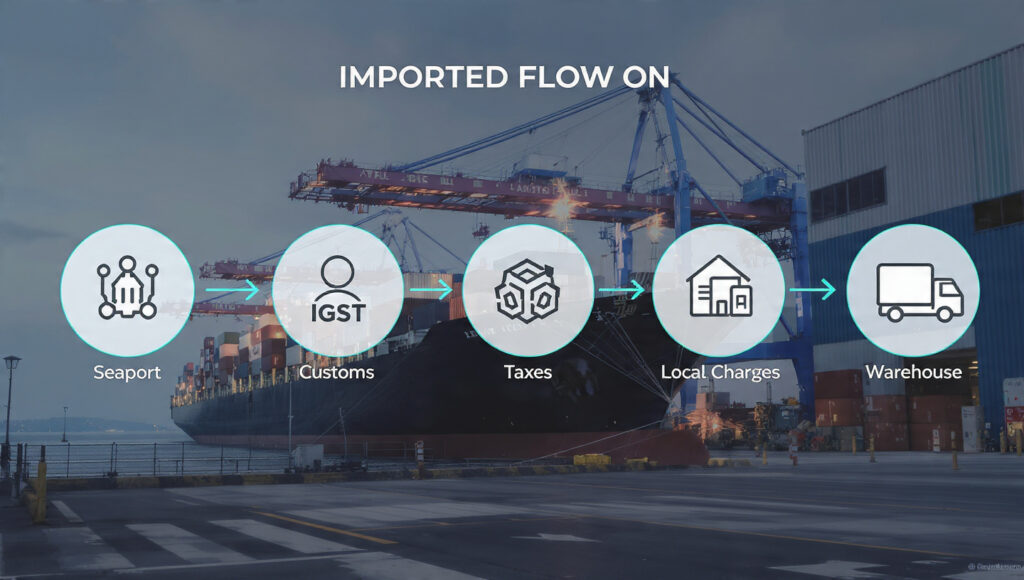
Illustration showing landed cost breakdown in Indian import business including product price, freight, customs duty, IGST, port charges, and warehouse delivery
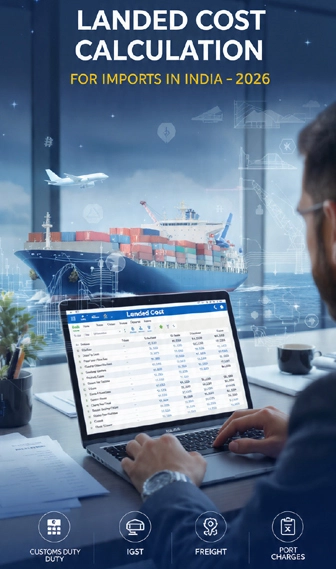
Indian importer calculating landed cost including FOB, EXW, customs duty, freight, and taxes before pricing goods for sale.
Comparison of product price vs full landed cost in import business showing impact on profit margins, cash flow, and compliance costs.

Why Landed Cost Matters More Than Product Price

Many importers focus only on:

  • FOB price
  • EXW price
  • Supplier discounts

But ignoring the landed cost can result in:

  • Incorrect selling price
  • Low profit margins
  • Cash flow shortages
  • Compliance penalties
  • Unexpected port costs

Your profitability depends on landed cost accuracy.

Product Cost vs Final Landed Cost

Component Included in Product Price? Included in Landed Cost?
Product Cost Yes Yes
Freight No Yes
Insurance No Yes
Customs Duty No Yes
IGST No Yes
Port Charges No Yes
Local Transport No Yes

Landed cost is the complete financial picture.

Components of Landed Cost in India

To calculate landed cost correctly, you must understand each component involved.

1. Product Cost (FOB / EXW)

This is the base price paid to your supplier.

  • EXW (Ex Works) – You handle pickup and freight.
  • FOB (Free on Board) – Supplier loads cargo at port.

This is the starting point — not the final cost.

2. Freight Charges (Air vs Sea)

Freight cost depends on:

  • Mode of transport
  • Cargo volume (CBM)
  • Weight
  • Seasonality
  • Route
  • Carrier availability

Air freight is faster but higher cost.

Sea freight is slower but economical for bulk shipments.

Freight directly impacts CIF value and therefore duty calculation.

3. Insurance Cost

Marine or air cargo insurance is typically a small percentage of cargo value. However, it forms part of the CIF value, which becomes the basis for duty calculation.

4. Basic Customs Duty (BCD)

BCD is applied on the Assessable Value (CIF value).

Rates vary depending on:

  • HSN code
  • Product classification
  • Government notifications
  • Trade policies

BCD can range from 0% to 40% depending on category.

5. Social Welfare Surcharge (SWS)

SWS is calculated as:

10% of BCD amount

It is a surcharge applied on customs duty and must be included in total duty planning.

6. IGST on Imports

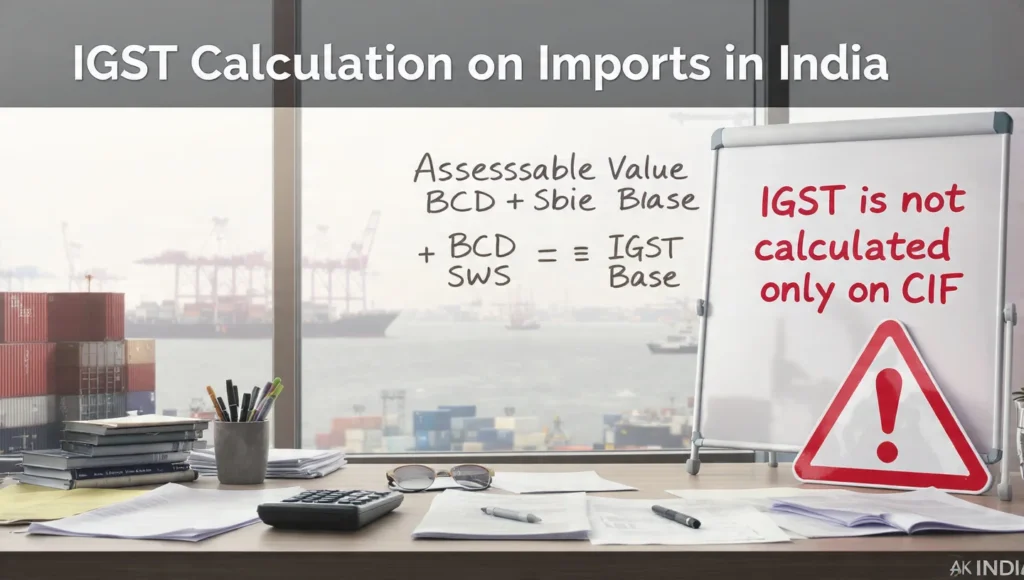
IGST is calculated on:

Assessable Value + BCD + SWS + applicable additional duties

This is where many importers make mistakes — IGST is not calculated only on CIF.

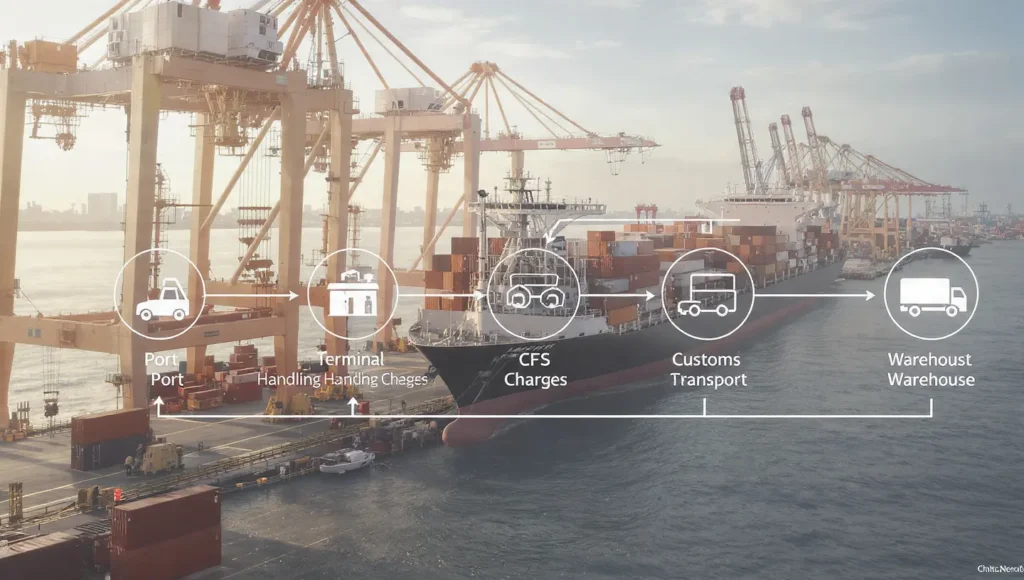
7. Port & Handling Charges

These may include:

  • Terminal handling charges
  • Documentation charges
  • CFS charges
  • Container handling fees

These vary by port and shipment type.

8. CHA / Documentation Charges

Customs House Agent (CHA) services include:

  • Bill of Entry filing
  • Documentation management,
  • Customs coordination
  • Inspection handling,

Professional service fees are part of landed cost.

9. Last-Mile Transportation
Final delivery from:

  • Port to warehouse
  • Airport to warehouse
  • ICD to factory

Fuel cost, distance, and container type impact this component.

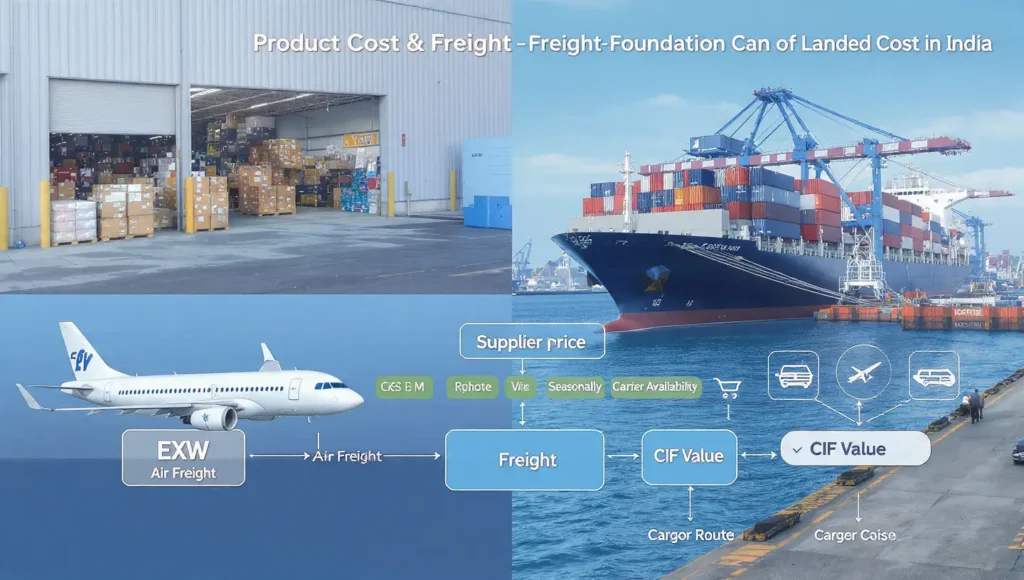
Infographic showing EXW and FOB product cost with air and sea freight comparison forming CIF value in Indian import business.
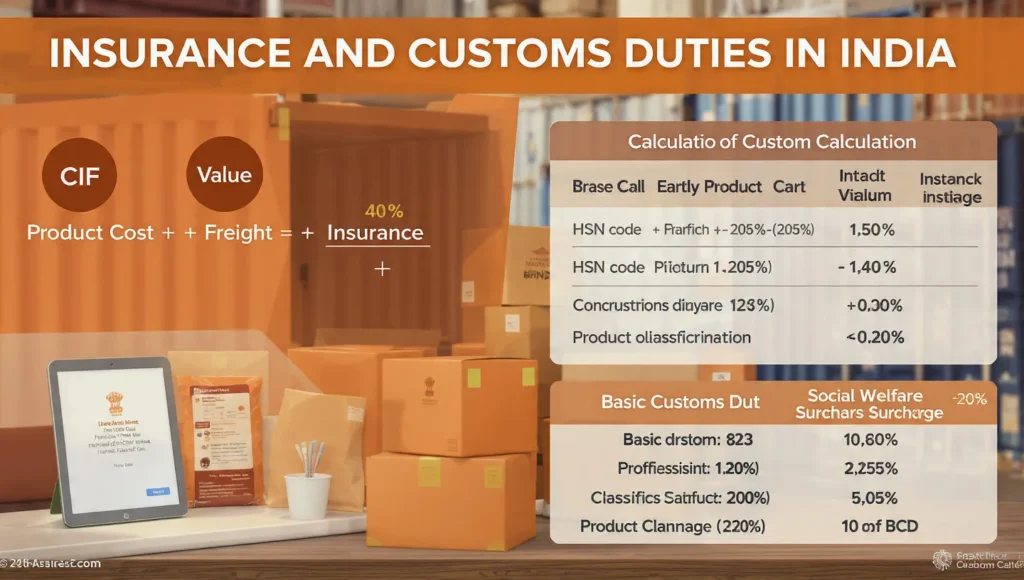
Illustration explaining CIF value, Basic Customs Duty rates, and Social Welfare Surcharge calculation in Indian imports
Visual explanation of IGST calculation on imports including assessable value, BCD, and SWS components.
Indian port handling, customs agent services, and final truck delivery costs included in landed cost calculation

Step-by-Step Landed Cost

Calculation Example

Let’s understand with a simplified example.

Example Scenario – Importing Electronics

  • Product Cost (FOB): ₹5,00,000
  • Freight: ₹50,000
  • Insurance: ₹5,000,

Step 1 – Calculate CIF (Assessable Value)

CIF = Cost + Insurance + Freight

CIF = 5,00,000 + 50,000 + 5,000

CIF = ₹5,55,000

Step 2 – Calculate BCD (Assume 10%)

BCD = 10% of 5,55,000

= ₹55,500

Step 3 – Calculate SWS (10% of BCD)

SWS = 10% of 55,500

= ₹5,550

Step 4 – Calculate IGST (Assume 18%)

IGST Value Base = 5,55,000 + 55,500 + 5,550

= ₹6,16,050

IGST = 18% of 6,16,050

= ₹1,10,889

Step 5 – Total Duty Payable

Total Duty =

BCD + SWS + IGST

= 55,500 + 5,550 + 1,10,889

= ₹1,71,939,

Step 6 – Add Local Charges

Assume:

Port & CHA: ₹25,000

Local Transport: ₹15,000

Final Landed Cost

Landed Cost = CIF + Total Duty + Local Charges

= 5,55,000 + 1,71,939 + 40,000 = ₹7,66,939

This is your real cost.

Visual flow of landed cost calculation in India showing product cost, freight, insurance, customs duty, and taxes for imported electronics
Illustration of imported electronics shipment showing customs duties, taxes, port charges, and final delivery to warehouse in landed cost calculation

How Freight Mode Impacts Landed Cost

Air Freight Impact

  • Higher freight cost
  • Faster delivery
  • Lower inventory holding cost
  • Higher chargeable weight exposure

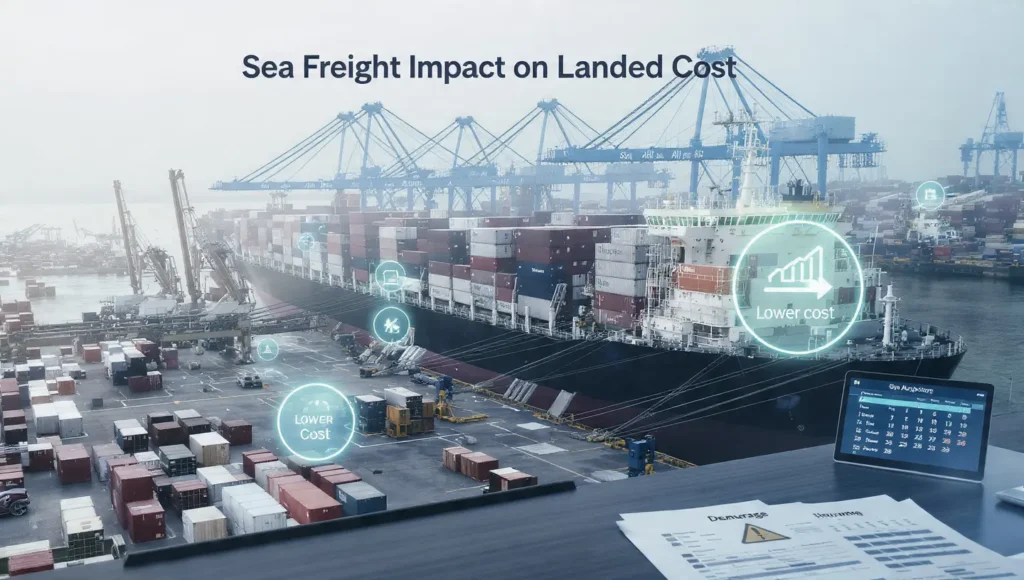
Sea Freight Impact

  • Lower freight cost
  • Longer transit
  • Suitable for bulk cargo
  • Demurrage risk if delayed

Freight selection affects both duty base and cash flow timing.

Air freight shipment at airport showing faster delivery but higher freight cost impact on landed cost and cash flow.
Sea freight cargo ship at Indian port illustrating lower freight cost, bulk shipment advantage, and longer transit impact on landed cost

Hidden Costs Importers Often Miss

Exchange Rate Fluctuation

Customs uses notified exchange rates.

Small fluctuations can impact total duty.

Demurrage & Detention

If clearance is delayed:

  • Container charges increase
  • Port storage fees apply

These are often unplanned expenses.

Incorrect HS Classification

Wrong classification can result in:

  • Higher duty
  • Penalties
  • Reassessment
  • Delays

Unexpected Inspection

Physical inspection may:

  • Increase clearance time
  • Add handling charges

Importer reviewing currency exchange rate fluctuations affecting customs duty and landed cost in India.
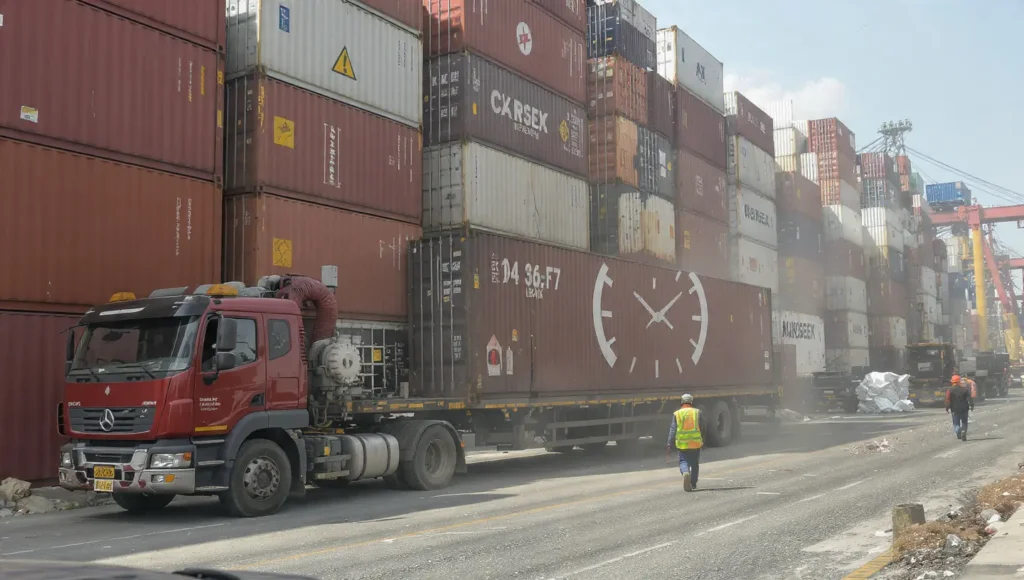
Delayed shipping containers at Indian port showing demurrage and detention charges increasing landed cost.
Customs officer reviewing HSN classification documents highlighting risk of incorrect duty calculation in imports.
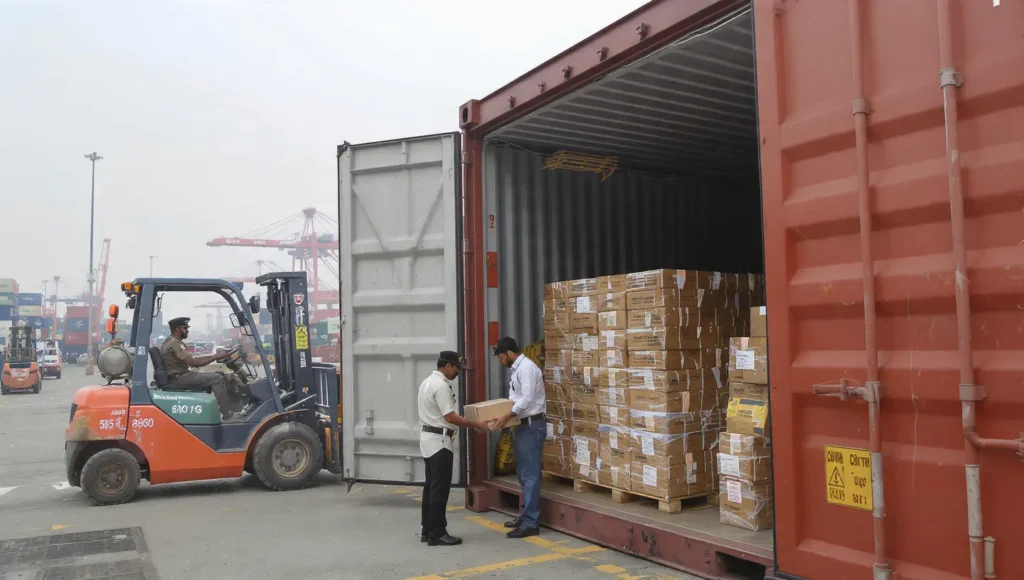
Customs inspection of imported cargo at Indian port causing clearance delays and additional handling charges.

Simple Landed Cost Formula

Basic Framework:

Landed Cost = CIF + Customs Duties +

Taxes + Local Charges

However, actual final duty is subject to assessment by customs authorities.

Landed Cost Planning for Different Importers

First-Time Importers

Require:

  • Duty estimation guidance
  • Compliance awareness
  • Documentation clarity

Amazon & E-commerce Sellers

Need:

  • Predictable landed cost
  • Margin planning
  • Fast clearance

SMEs

Focus on:

  • Cost control
  • Cash flow management
  • Volume optimization

Large Enterprises

Require:

  • Multi-port coordination

  • Regulatory compliance
  • Scalable freight planning

First-time importer reviewing customs documents and calculating duties with logistics guidance in India.
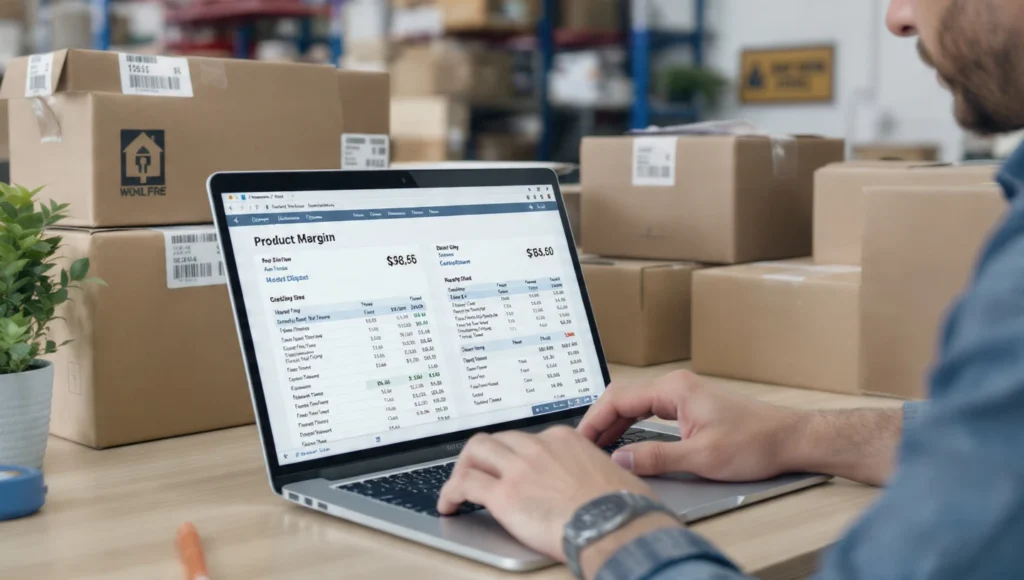
E-commerce seller calculating landed cost and profit margins before dispatching imported products.
SME business owner managing import costs, cash flow, and shipment volumes for better landed cost control.
Corporate logistics team planning multi-port import operations and regulatory compliance for optimized landed cost

Landed Cost Planning for Different Importers

  1. Ignoring SWS calculation

  2. Calculating IGST only on CIF

  3. Not including local handling charges
  4. Assuming duty rates never change
  5. Relying on unofficial exchange rates

Structured estimation reduces financial risk.

Role of a Freight Forwarder in

Landed Cost Optimization

A structured logistics partner can help:

  • Plan shipment mode
  • Optimize routing
  • Guide HS classification
  • Provide freight comparison
  • Coordinate documentation

However, final customs assessment always rests with authorities.

Freight forwarder advising importer on shipment mode, routing, and freight comparison for landed cost optimization
Freight forwarder coordinating customs documentation and compliance for efficient import clearance in India

Important Compliance Note

This article provides general educational information on landed cost calculation for imports in India. Duty rates, exchange rates, regulatory notifications, exemptions, and Free Trade Agreements may change. Final duty payable is determined by Indian customs authorities at the time of assessment.

FAQs – Landed Cost Calculation

for Imports in India

Product cost, freight, insurance, customs duty, IGST, handling charges, and final delivery expenses.

No. CIF is only part of landed cost.

It can be estimated, but final duty depends on customs assessment.

Due to exchange rates, inspections, reclassification, or regulatory notifications.

Through correct HS classification, shipment planning, and optimized freight selection.

Conclusion

Understanding landed cost calculation for imports in India is essential for pricing strategy, cash flow planning, and long-term sustainability. Import success is not about finding the cheapest supplier — it is about accurately calculating total cost before shipment. A structured, compliance-aware approach reduces financial surprises and improves operational stability.